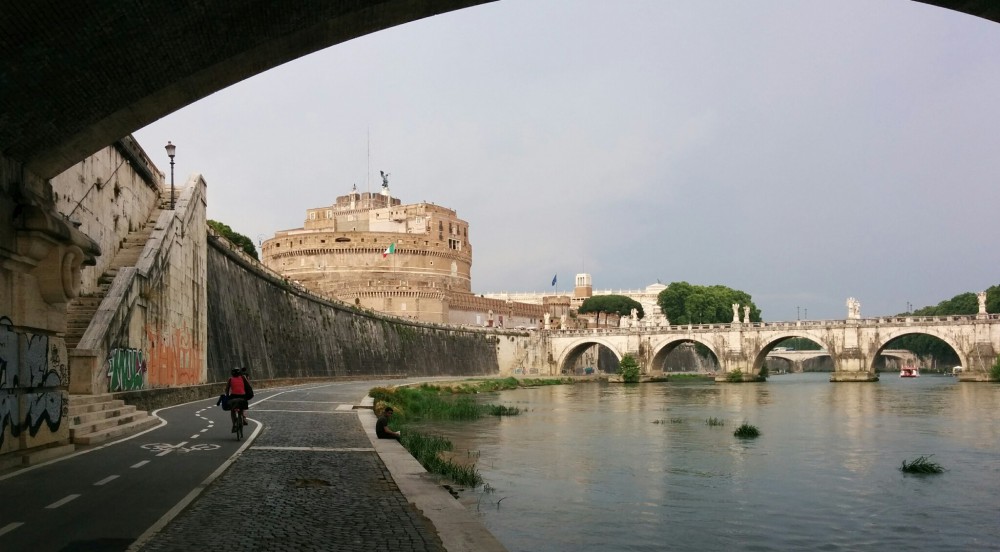
I have often been asked for advice about buying things related to bicycling. Probably the most common set of questions concerns clothing. Sometimes people are attracted to the high-visibility color schemes of my jerseys. Other times, cyclist are contemplating shorts, or shoes, or a helmet, and they wonder if such things are worth the money.
I am not going to cover everything about bicycle clothing. However, here are the answers to some of the questions that I have been asked. What you are reading is strictly my own opinion. It could change tomorrow if I get new information, or discover a new product.
Helmets. Starting from the top, a bicycle helmet remains one of the best investments a cyclist can make. The Netherlands and Copenhagen are still the only two places where one can cycle decent distances with a minimal risk of colliding with a motor vehicle. Anyone riding faster than 25 km/hr or sharing the road with motorists should wear a helmet.
There is a problem with the helmet safety standard in the United States, but that is not a reason not to wear a helmet. The helmet safety standard was designed in the early 1950s to protect race car drivers (NASCAR) from skull fractures. The ubiquitous helmet of American football was designed to do the same thing, using approximately the same safety standard. You can drop a heavy weight from a great height on the helmet and your skull will not crack. However, the helmet does nothing to protect against concussion, which research and injury data over the last 60 years has taught us is the most common problem in either a football collision or a bicycle crash. This is because the brain sloshes around inside the brain case, and the helmet only keeps the brain case from cracking.
There are new helmets that protect against concussion. They were developed in Europe years ago and arrived in the USA about 2015. They feature a suspension system that lets the head twist a little inside the helmet, reducing the angular stress that sloshes the brain around. Look for a MIPS sticker or the gills in the helmet that crush in a collision, absorbing the angular impact.
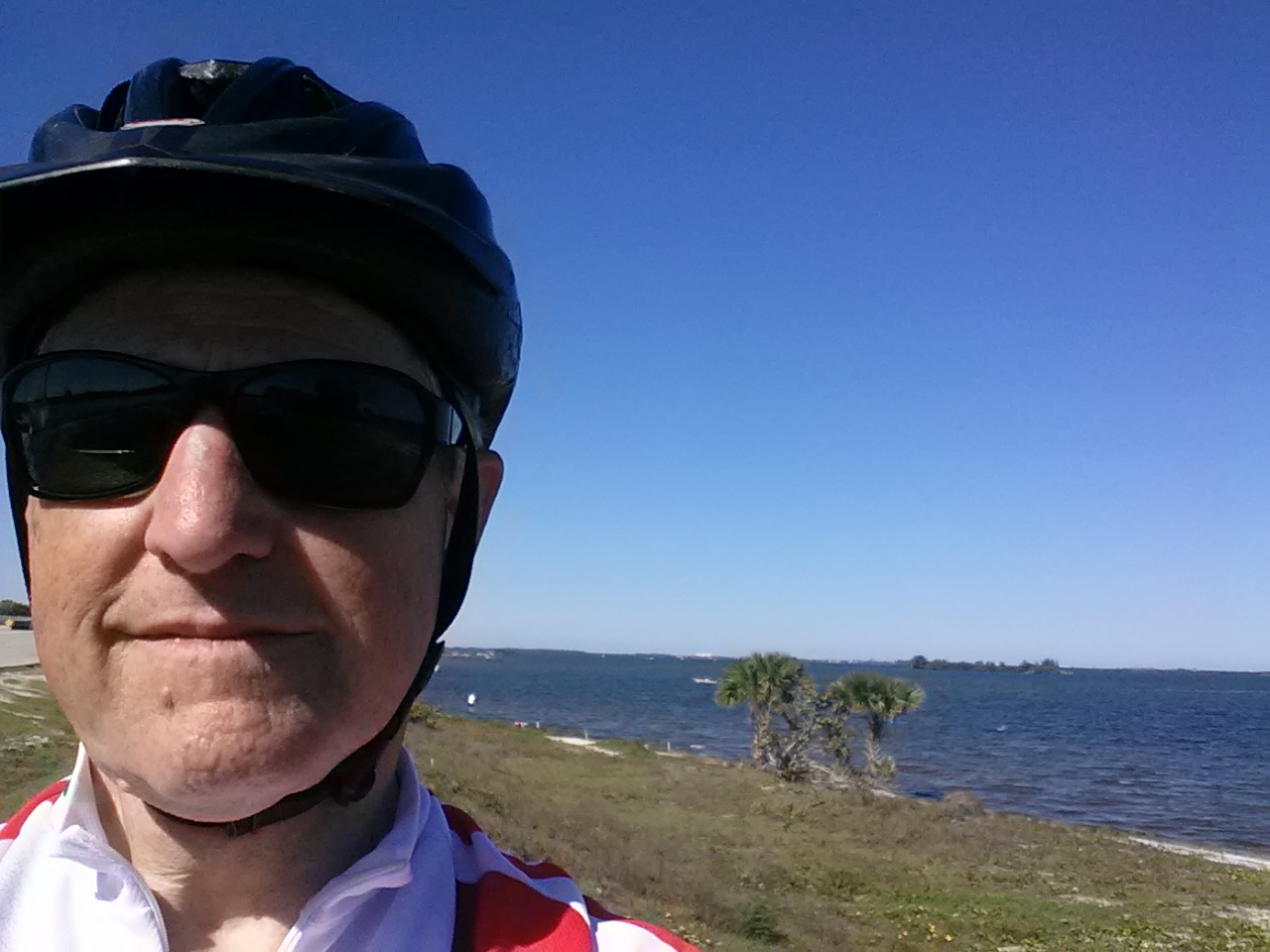
A safe head.
Always buy a new helmet, and change it after six years, because the Styrofoam inside the helmet ages and becomes brittle. You can choose the helmet for looks, style or weight; they all meet the same safety standard, so they all protect your head. This means that you can let your child pick any helmet she likes in the bike store. There is nothing safer about the others.
Eye wear. Below the helmet are the eyes. Whether you need prescription glasses are not, I would recommend always wearing some kind of eye protection. Personally, I buy polarized lenses with the biggest coverage I can find. I like them with a plastic, sealed nose area rather than nose clips, because the principal purpose of glasses for me is to keep bugs and rocks out of my eyes.
I recently learned that blue UV radiation has long-term effects on retinal health. If you happen to be ordering new sunglasses for any reason, you might consider dark amber, rather than the default smoke, green, or gray. Amber will block the blue radiation in sunlight.
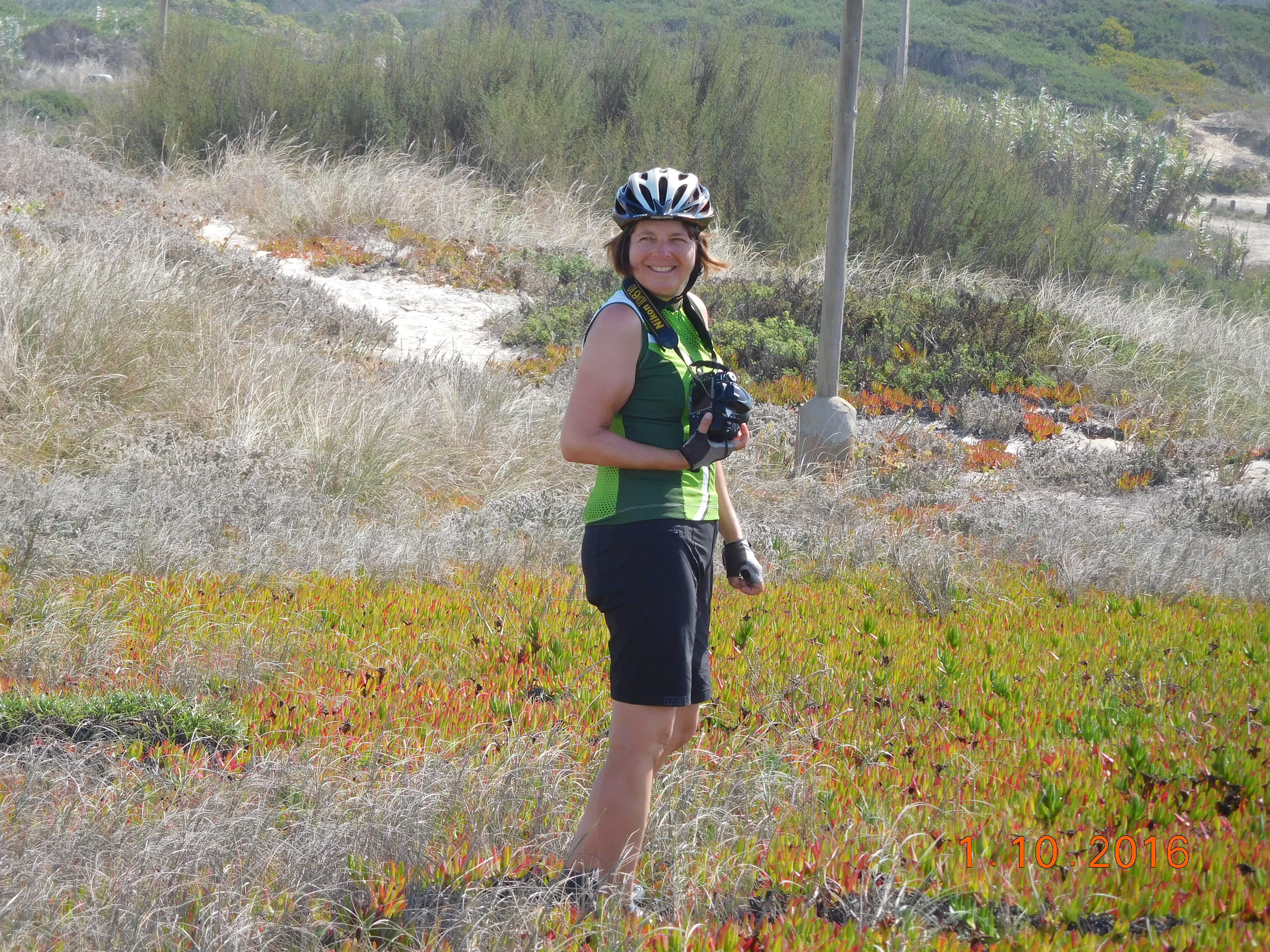
Jerseys. Probably the most visible part of my clothing is my bicycle jersey. I believe that I cannot wear a jersey that is too bright.
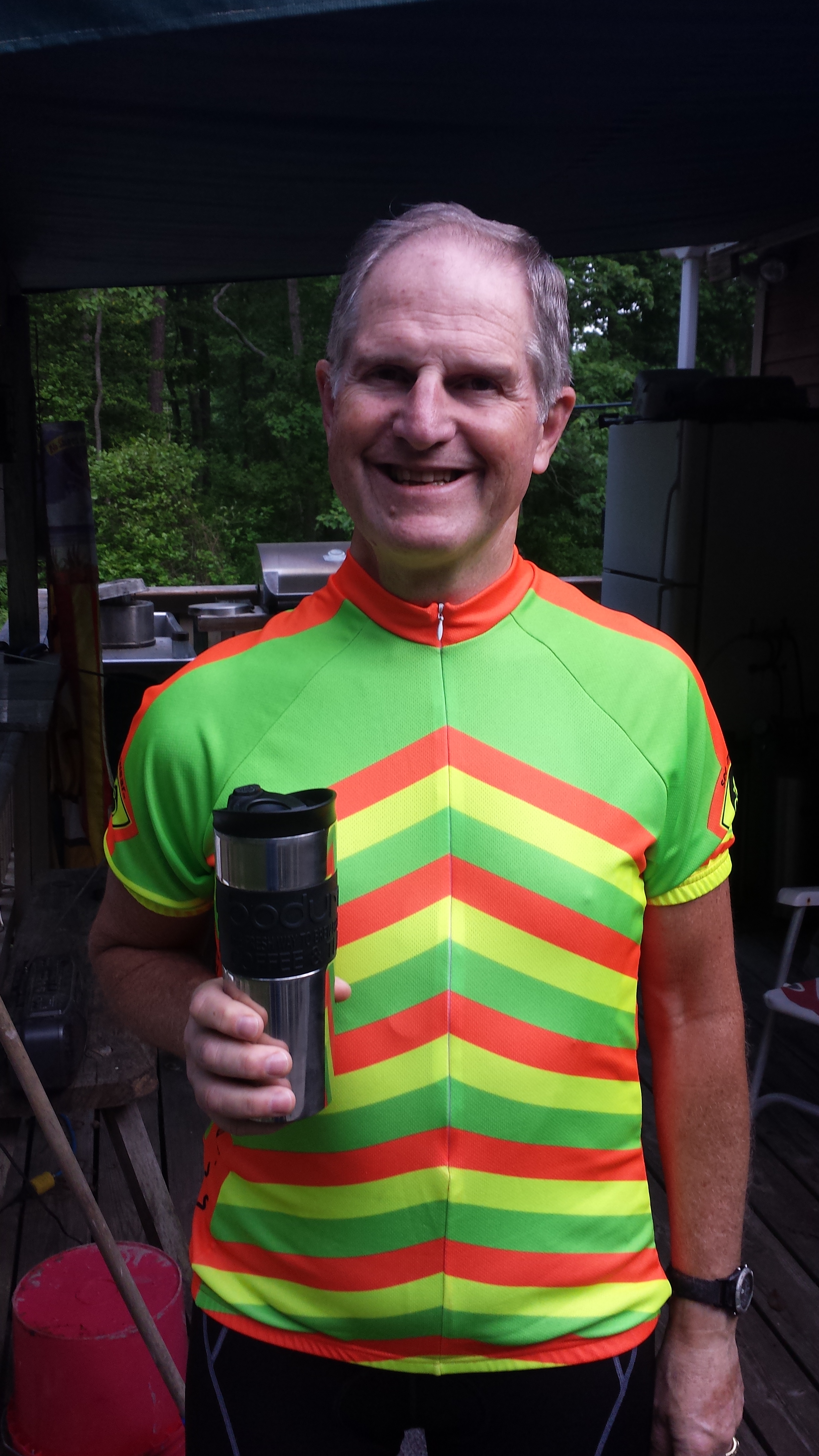
My favorite design is the chevron by See Me Wear (http://www.seemewear.com/). There are various neon-colored jerseys by other manufacturers in most bike stores. I also prefer full-zipper jerseys, because they are more convenient to get in and out of, and because I can zip them as far down as necessary during hot weather.
Shorts. The common feature of all bicycle shorts is the chamois insert. You can find the chamois insert on cargo pants for mountain biking as well as the traditional spandex bicycle shorts. This chamois is not truly a leather product in most cases. Instead it is a high-tech, multilayered pad that serves many purposes.
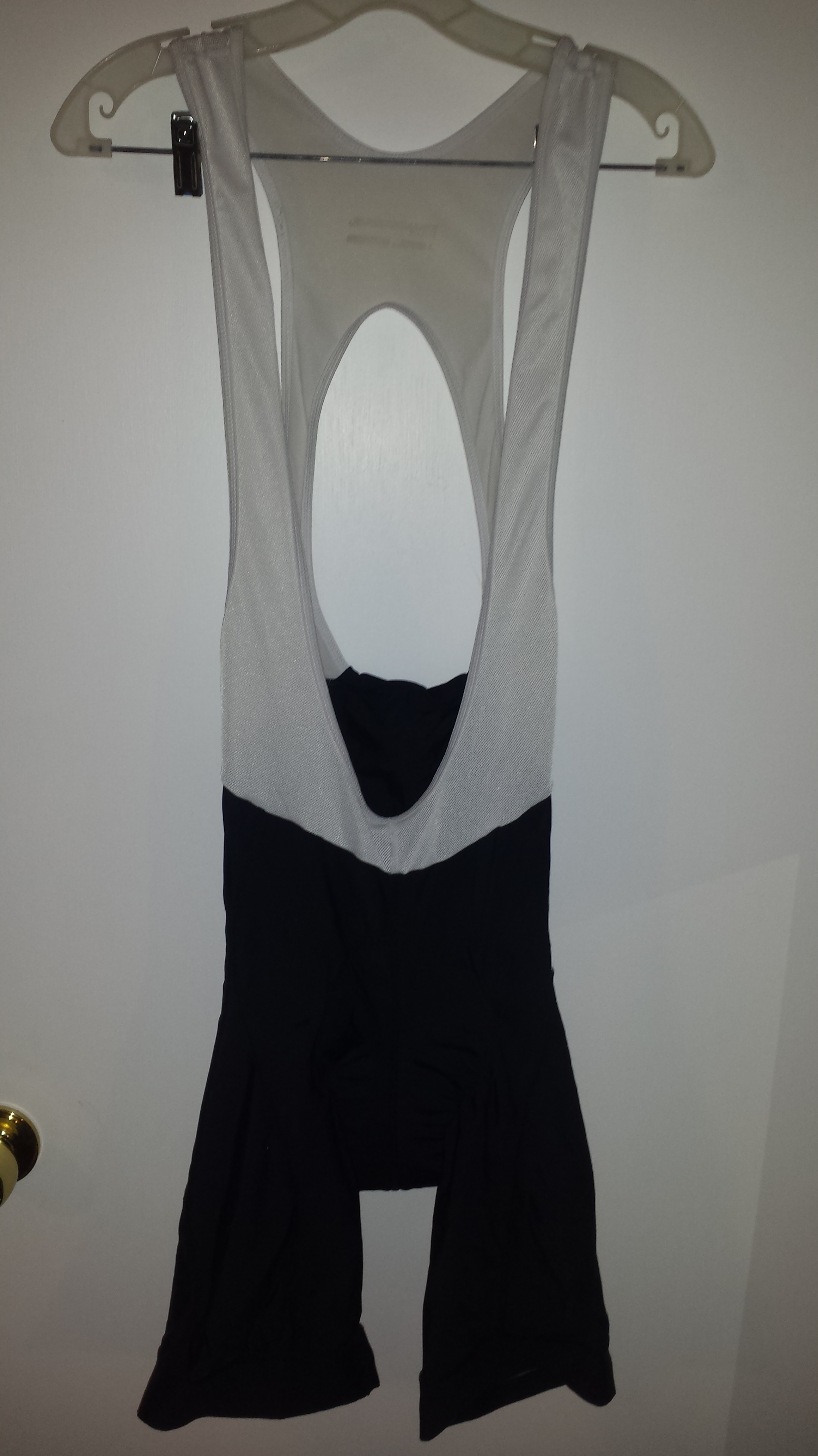
Personally, I prefer bib-style bicycle shorts, because the shoulder straps keep the entire assembly neatly attached to my body. With any kind of physical activity, spandex shorts tend to crawl up or crawl down. This does not happen with bib shorts. Before I could afford bib shorts, I started using traditional suspenders under my jersey, which is still an option.
Socks. All my bicycle clothing is made of high-tech fabric, which washes out in cold water and dries overnight in the summer. Cotton and wool socks are good for hiking, they are not necessary for bicycling, except in deep snow in Canada and Minnesota.
Shoes. Obviously, I wear bicycling shoes. However, I cannot carry extra pairs.
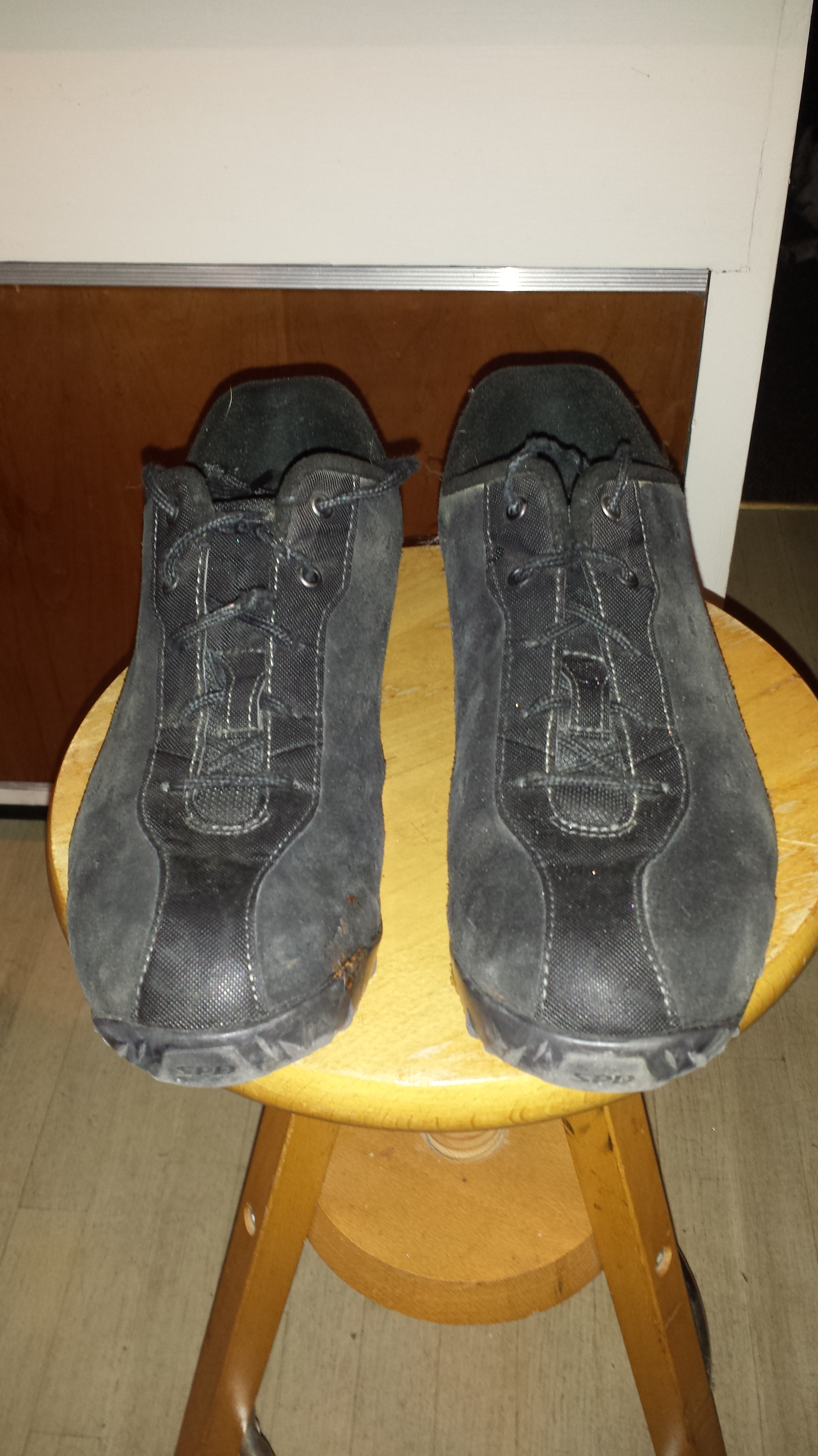
I wear MTB shoes with cleats. I prefer black, because that is the most common color for any activity, including those rare occasions when I must wear street clothes. I try to find a plain design, again so I don’t need another pair of shoes to walk around.
I have given away more than a half-dozen pairs of bicycle shoes since I began living on my bicycle. The lesson learned is to make sure that my shoes fit generously. Feet swell during a long day in the saddle and few things makes my feet go numb faster than tight shoes.
Because it is a hassle either to walk with cleats on hard floors or concrete, or to take the cleats out, I have a pair of Teva® water shoes in my pannier. I wear them when I stop riding my bicycle for the day. These are the same shoes that sports stores sell for kayaking and other activities around the water. I have had them for almost 2 years, and they are still not showing any wear. They crush up to nothing in the top of my pannier. I also have a pair of Keen sandals, which I like very much. I usually pack either the water shoes or the sandals, not both.
Many of you ride bicycles, and clothing is a very personal subject. Do you have any personal likes or dislikes to share about bicycle clothing, or clothing for long treks?
Smooth roads and tailwinds,
Jonathan

 This week, I would like to share a guest post from Dan and Erika, a very smart couple who have just started out living on the road together. They are fast learners. In this post, they deal with the challenge of spending day in and day out with the same person. That has ups and downs, and they have excellent suggestions for the downs. Enjoy!




 The Freewheeling Freelancer